AC vs DC Motors: Choosing the Right Drive
Compare AC and DC motors by torque, control, cost, and maintenance. Learn how to choose the right drive and controller for your application.
Big Picture
Selecting between AC motors and DC motors begins with understanding how each aligns with your power source, control needs, and operating environment. AC motors typically pair well with grid power, offering rugged construction, straightforward installation, and strong value for continuous or semi-continuous loads. DC motors shine when you need fine speed control, fast response, or battery-powered operation, and they often deliver high starting torque with minimal complexity. Today's drives blur the line: variable frequency drives (VFDs) unlock smooth, efficient control for AC machines, while electronic speed controllers (ESCs) and servo drives bring precision to brushless DC (BLDC) systems. The right choice hinges on the duty cycle, desired torque-speed range, environmental conditions, maintenance capability, and total cost of ownership. Consider efficiency, noise, electromagnetic compatibility (EMC), and safety compliance alongside performance. When framed as a system decision—motor, drive, power, mechanics, and controls—AC and DC options become complementary tools. By mapping requirements to strengths, you ensure the drive you select supports reliability, productivity, and long-term savings.
How AC Motors Work
AC motors convert alternating current into mechanical rotation using a stator that creates a rotating magnetic field and a rotor that follows it. In induction motors, rotor currents are induced by the stator field, producing torque with a slight slip between electrical and mechanical speed. Synchronous motors lock to the rotating field, sometimes using permanent magnets or a wound rotor for precise speed and high efficiency. The elegance of AC lies in scalability and durability: few wear parts, dependable bearings, and robust frames handle demanding environments. Speed control comes from frequency and voltage, which VFDs adjust in real time to match process needs and reduce energy waste. Modern techniques like vector control boost low-speed torque and dynamic response, enabling conveyor indexing, mixers, and hoists to run smoothly. Considerations include power factor, inrush current, and potential harmonics from drives, all manageable with proper sizing, filtering, and grounding. When matched to the application, AC motors deliver quiet efficiency, minimal maintenance, and industrial-grade resilience.
How DC Motors Work
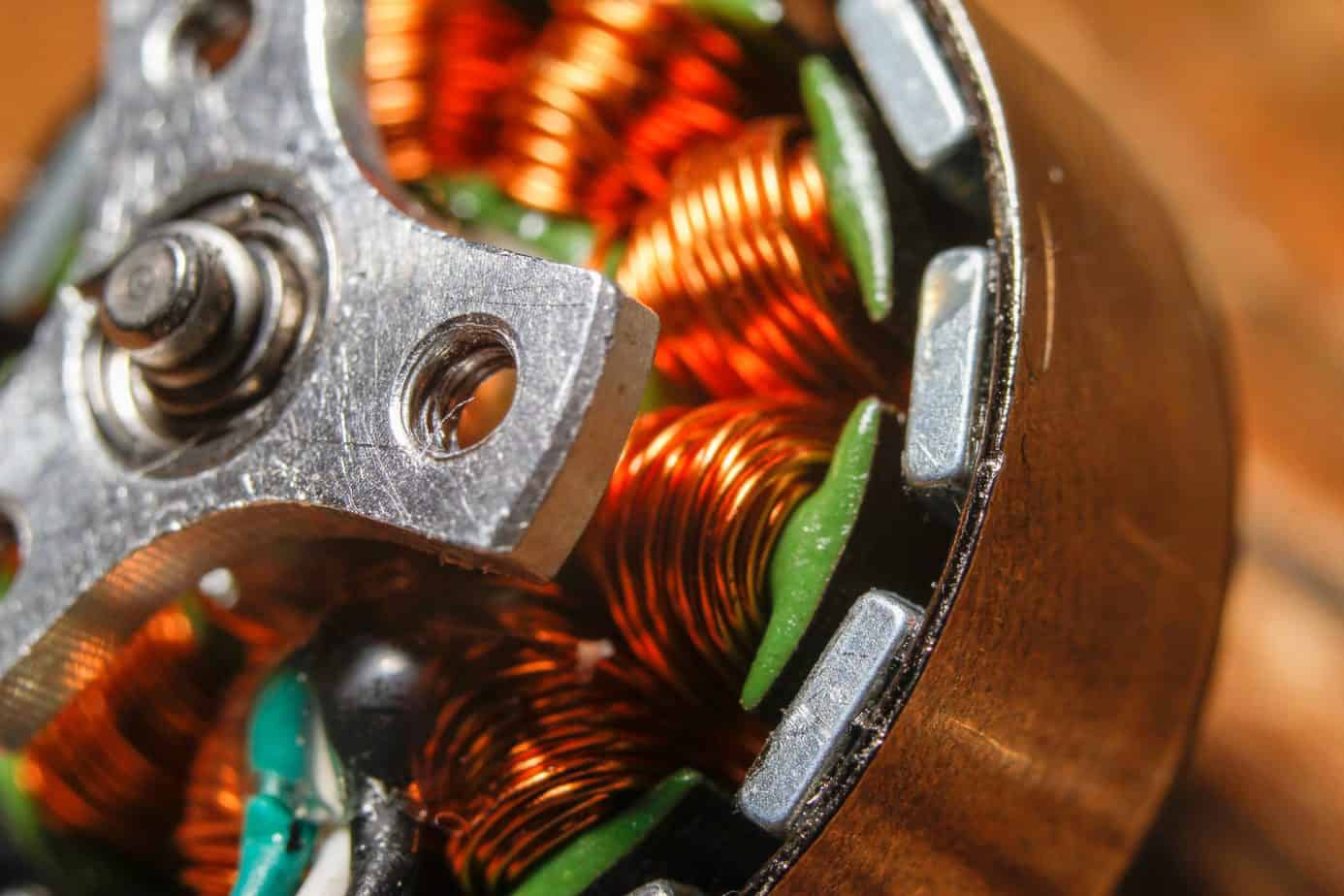
DC motors create torque by aligning magnetic fields from the stator and the rotor's armature. In brushed DC designs, a commutator and carbon brushes switch current mechanically, producing high starting torque and a nearly linear torque-speed relationship. Control is intuitive: adjust voltage or apply pulse-width modulation (PWM) for fine speed regulation and quick response. Brushless DC (BLDC) motors replace brushes with electronic commutation, often using Hall sensors or sensorless algorithms for position feedback. This yields higher efficiency, reduced maintenance, and excellent torque density, making BLDC a favorite for servo tasks and battery applications. DC's strengths include rapid acceleration, precise low-speed behavior, and compact packaging. Trade-offs exist: brushed motors require brush replacement and can generate electrical noise; brushless systems need a capable drive and careful EMC design. With the right controller—tuned for current, speed, or position—DC platforms deliver crisp control across wide operating ranges, supporting agile machines, portable tools, and responsive automation.
Performance and Control Factors
Comparing performance centers on torque-speed curves, dynamic response, and control architecture. AC motors with VFDs, especially using field-oriented control (FOC) or direct torque control (DTC), achieve swift torque regulation and high efficiency while maintaining smooth motion. DC servos remain compelling for fine positioning, benefiting from inherently linear torque control and low-speed precision. In both camps, closed-loop feedback—via encoders, resolvers, or sensorless estimators—elevates accuracy, handles disturbances, and protects against overload. Consider continuous versus peak torque, thermal limits, and duty cycles that cycle between acceleration, steady operation, and braking. For rapid ramps or frequent starts, evaluate inertia matching, current limits, and regenerative braking strategy, whether returning energy to the source or dissipating it through braking choppers. Pay attention to torque ripple, audible noise, and harmonic distortion, which can influence quality and comfort. Well-tuned control loops, clean grounding, and proper filtering shape a drive system that is precise, efficient, and electrically quiet.
Applications and Environments
Application fit often decides the AC versus DC discussion. AC induction motors excel in fans, pumps, and compressors, where steady loads benefit from durability and high efficiency, and where VFDs trim energy by matching speed to demand. Synchronous AC designs tackle high-efficiency, fixed-speed tasks or tight process synchronization. DC brushed motors suit compact, cost-sensitive systems needing strong starting torque and simple controls, while BLDC motors shine in robotics, conveyance, and precision mechanisms that require responsiveness, low maintenance, and battery compatibility. Match the choice to the environment: dust, moisture, vibration, and temperature extremes may call for special enclosures, ingress protection, or cooling strategies. In hazardous areas, select compliant constructions and drives with appropriate protection. Consider space, weight, and acoustic goals, as well as the availability of maintenance personnel and spare parts. Finally, verify the power supply—mains, generator, or onboard storage—along with required communications, safety interfaces, and start-up constraints that influence motor and drive selection.
Cost, Maintenance, and Selection Steps
Total cost blends purchase price, energy use, commissioning, and maintenance. AC motors often lead on cost per kilowatt and long-term durability; paired with efficient VFDs, they deliver compelling lifecycle savings on variable loads. DC brushed motors keep upfront costs low but add periodic brush service and potential downtime. BLDC systems reduce mechanical wear yet require capable electronics and attention to EMC and thermal design. Build a selection workflow: 1) define the load profile and duty cycle; 2) compute torque-speed requirements with margins for transients; 3) choose motor type based on power source, control precision, and environment; 4) size for thermal performance, overload capability, and service factor; 5) select a drive with appropriate current, frequency/voltage, and I/O; 6) validate cooling, protection, and compliance; 7) plan commissioning and maintenance. When in doubt, prototype with measured data. As a rule of thumb, pick AC with VFD for robust, efficient industrial duty, and choose BLDC or DC servo when compactness, precise control, or battery operation dominate.