Brushless vs Brushed Motors: What's the Difference?
Discover how brushless and brushed motors differ in design, efficiency, lifespan, maintenance, cost, and ideal uses so you can pick the right motor.
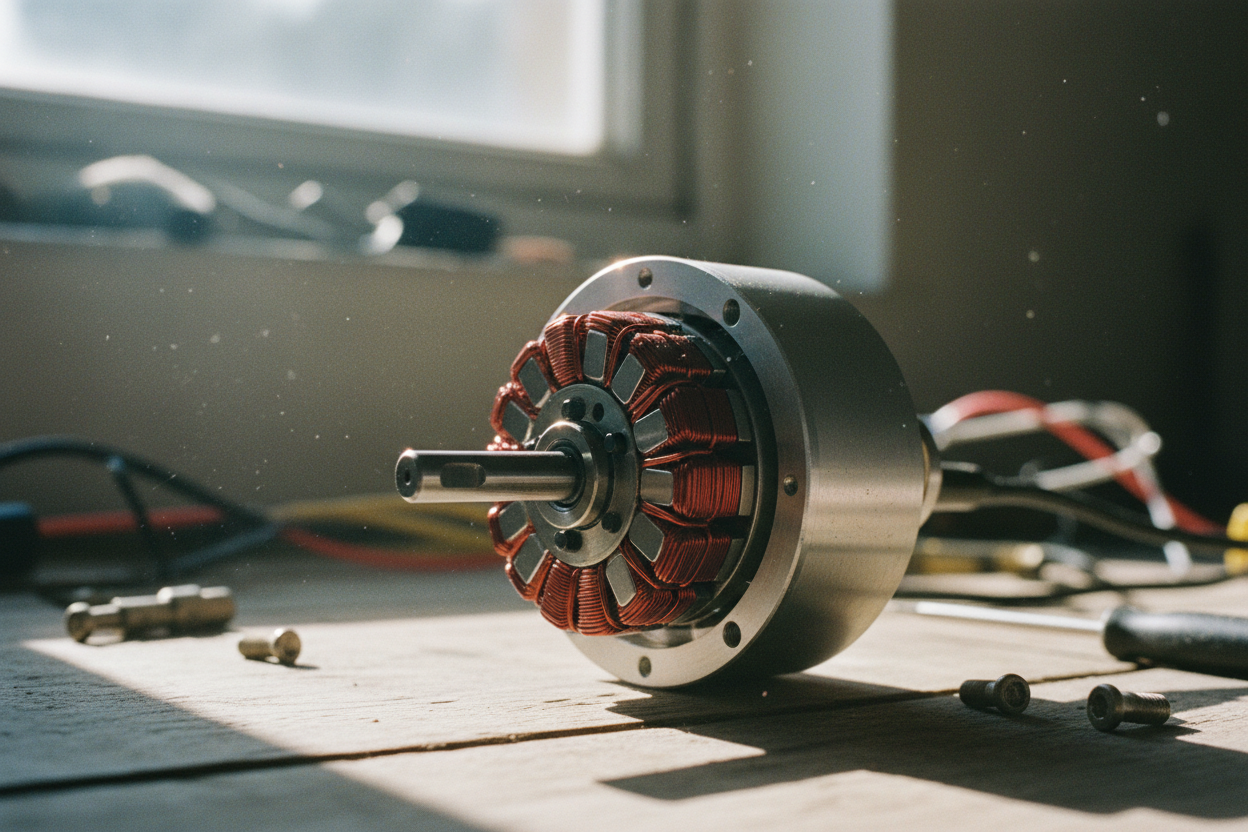
Introduction to Motor Types: At the heart of many motion systems are two widely used DC designs: brushed motors and brushless motors. A brushed motor relies on carbon brushes riding on a segmented commutator to route current to coils on the rotor. As the shaft spins, this mechanical switching produces a rotating magnetic field that creates torque. The method is simple, compact, and easy to power directly from a DC source. By contrast, a brushless motor places the windings on the stator and permanent magnets on the rotor, then performs electronic commutation using a controller that sequences the phases based on Hall sensors or back-EMF feedback. This arrangement removes brushes and the commutator, eliminating sparking and reducing friction. The tradeoff is that a brushless setup requires a dedicated driver or ESC to operate, adding some complexity but unlocking sophisticated control. These foundational differences shape how each motor behaves in efficiency, heat, noise, power density, and long-term maintenance across many applications.
Performance and Efficiency: In pure conversion of electrical power to mechanical output, brushless motors typically lead. With no brush contact, they avoid frictional losses and resistive heating at the commutator, so more input energy becomes useful torque. Their power-to-weight ratio and sustained efficiency often remain high across a broad speed range, which translates into longer battery life and cooler operation under continuous loads. Advanced control such as field-oriented control (FOC) helps maintain smooth torque and excellent low-speed behavior, while precise timing improves dynamic response during rapid acceleration. Brushed motors, on the other hand, can deliver strong starting torque and are forgiving when paired with simple power supplies. However, they tend to lose efficiency as speed and load increase, shedding energy as heat at the brushes and commutator. They may also exhibit more torque ripple and cogging, though appropriate gearing and drive techniques can mitigate these effects for many practical, cost-sensitive systems.
Longevity and Maintenance: The physical contact in brushed motors introduces predictable wear. Brushes abrade over time, creating conductive dust and gradually changing contact characteristics. The commutator can develop uneven surfaces, requiring cleaning or resurfacing, and the system may produce arcing that stresses components. In routine service, brush inspection and replacement restore performance but also create downtime. Conversely, brushless motors eliminate this wear mechanism; with stationary windings and a magnet rotor, the primary wear items are typically bearings. As a result, brushless designs often achieve longer service life, especially in continuous-duty or high-speed roles where brushes struggle. Reduced arcing makes them better suited to environments sensitive to sparks, contamination, or electrical noise. Thermal behavior also matters: improved efficiency and distributed stator windings help manage heat, maintaining winding insulation integrity over the long term. While both types benefit from proper cooling and alignment, brushless options usually require less preventive maintenance, which can pay dividends when access is difficult or uptime is critical.
Control, Noise, and User Experience: For immediacy and simplicity, brushed motors are hard to beat: connect two wires, vary voltage or apply PWM, and the shaft responds. This makes them ideal when a low-cost driver and quick integration are priorities. The downside is electromagnetic interference from brush arcing and less refined control at low speeds. Brushless motors depend on an ESC or dedicated controller that handles commutation, current limiting, and features like soft start, regenerative braking, and precise speed or position control. With sensorless back-EMF detection, they can run efficiently with minimal wiring; with Hall sensors, they gain reliable startups under load and better low-speed smoothness. Acoustic behavior differs too: brushed designs can produce brush chatter, while brushless setups may emit a controlled switching whine. Good control algorithms reduce torque ripple, enabling quieter, smoother motion in drones, power tools, small robotics, appliances, conveyors, and cooling fans where consistent response and low noise matter.
Cost and Choosing the Right Motor: The decision between brushless and brushed often balances upfront cost, control complexity, and lifecycle value. Brushed motors are typically cheaper, simpler to wire, and adequate for intermittent or light-duty tasks where occasional maintenance is acceptable. They shine in cost-sensitive projects, quick prototypes, and applications with modest duty cycles. Brushless motors carry the additional expense of a controller but return value through higher efficiency, reduced heat, improved reliability, and longer service intervals. Consider the duty cycle, desired speed range, expected load profile, noise limits, battery runtime, and available integration skills. Environments with dust, fumes, or a need to minimize sparks strongly favor brushless. If precision control, compact size, and consistent long-term performance top the list, brushless is usually the better fit. If budget, simplicity, and easy field service dominate, a well-matched brushed motor remains a practical, time-tested choice.