Cooling Methods for Motors: Air, Liquid, and Beyond
Compare air, liquid, and advanced motor cooling—TEFC fans, water jackets, heat pipes—to raise power density, efficiency, and service life.
Why Motor Cooling Matters. Motors convert electrical energy into mechanical work, and every conversion step generates heat through copper losses, core losses, and mechanical friction. Without effective cooling, hot spots form in windings, bearings, and power electronics that may be integrated near the drive. Elevated temperature shortens insulation life, increases resistance, and reduces efficiency, which can trigger a feedback loop of more heat and less performance. Well-implemented thermal management preserves power density, enables higher continuous torque, stabilizes timing and speed, and protects lubricants and seals. Cooling also widens the safe operating envelope across varying ambient conditions and duty cycles, guarding against thermal runaway during overloads or transient peaks. From compact servomotors in robotics to rugged traction machines, selecting and integrating the right cooling approach is central to reliability. Understanding airflow paths, coolant circuits, thermal interfaces, and monitoring strategies lets engineers design for predictable temperature rise, consistent clearances, and quiet, efficient operation over a long service life in demanding motor applications.
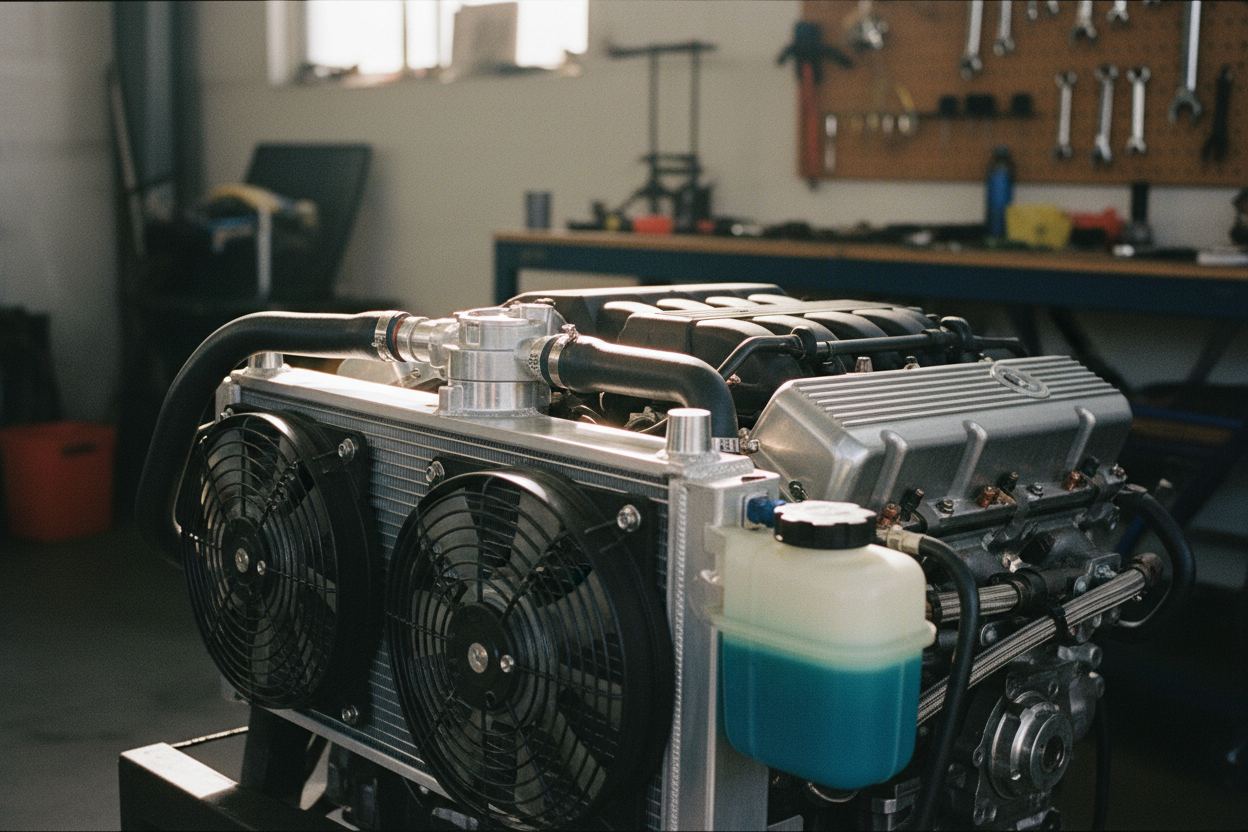
Air Cooling Fundamentals. Air cooling is often the first line of defense because it is simple, cost-effective, and inherently safe. Natural convection relies on buoyancy to carry heat off finned housings, while forced air uses fans or blowers to push higher volumes through guided paths. External fans mounted on the shaft are common in many motors, whereas separate blowers provide airflow independent of speed for low-rpm duty. Ducting, baffles, and shrouds matter: smooth airflow over fins, through stator channels, and around end windings can lift heat without excessive noise. Designers choose axial fans for higher flow and radial fans for better pressure when paths are restrictive. Ambient temperature, air density, dust loading, and enclosure ingress protection affect performance, so filters and periodic cleaning may be necessary. Air cooling shines for moderate heat flux and straightforward maintenance, but it hits limits as power density and thermal gradients climb, especially where space or noise constraints cap fan size and speed.
Liquid Cooling Techniques. When heat flux rises beyond what air can carry, liquid cooling offers a step-change in performance thanks to higher specific heat and thermal conductivity. Common architectures include water-glycol jackets integrated into the motor housing, cold plates beneath mounting faces, and oil-cooling circuits that wet internal components. Indirect systems move heat from stator and end turns to a jacket via metal paths and thermal interface materials, then on to a heat exchanger or radiator. Direct approaches, such as targeted oil jets at end windings, improve local heat removal and reduce temperature spread. Good practice demands compatible materials, corrosion inhibitors, filtration, and thoughtful routing to avoid trapping air. Flow rate, coolant temperature, and pump head must be balanced to minimize parasitic power and avoid vibration. Properly executed, liquid cooling enables compact frames, quieter operation, and high continuous torque. However, it adds complexity, seals, and maintenance considerations that must be weighed against performance goals.
Beyond Basics: Two-Phase, Spray, and Immersion. Advanced concepts push thermal performance further where extreme power density or tight envelopes demand it. Heat pipes and vapor chambers exploit two-phase transport to spread heat rapidly from hot windings or integrated electronics to larger external surfaces, evening out hot spots. Phase-change materials (PCM) can buffer transients by absorbing heat during bursts and releasing it later to a sink or jacket, helping motors survive peak loads without oversizing the cooling system. In some designs, controlled spray cooling or oil mist directly bathes end turns and rotors, using high wetted surface area to accelerate heat transfer while also aiding lubrication. Specialized immersion cooling in dielectric fluids offers excellent uniformity and acoustic benefits, though it requires sealed architectures and fluid management discipline. These methods demand careful attention to cleanliness, venting, and serviceability, but they unlock compact, quiet, and stable thermal behavior when air or conventional liquid jackets alone cannot achieve the required temperature margins.
Designing the Thermal Path Inside the Motor. Great cooling begins with an intentional thermal path from heat sources to sinks. Within the stator, tight stacking of laminations, high copper fill factor, and uniform impregnation or potting promote conduction. Selecting effective slot liners and varnishes that balance electrical isolation with thermal conductivity reduces winding-to-core resistance. Managing end turns with formed lacing, spacers, and conductive supports shrinks dead air pockets. At the housing, materials like aluminum accelerate heat spreading compared with thicker, more massive castings that may store heat. Surface treatments and fins increase area for convection or jacket contact. Between parts, quality thermal interface materials (TIMs) and proper torque on fasteners eliminate gaps and bolster repeatable performance. Bearing seats, shaft seals, and nearby electronics must be thermally decoupled or intentionally cooled to avoid cross-heating. By treating heat like a fluid with a defined route and minimal bottlenecks, designers achieve lower gradients, higher continuous ratings, and predictable warm-up behavior in real-world motor duty.
Smart Control, Sensors, and Adaptive Cooling. Cooling works best when combined with monitoring and control. Embedded RTDs, thermistors, or fiber sensors in stator slots and end turns provide temperature feedback for protection and optimization. Motor drives can modulate fan speed or pump flow based on load, ambient conditions, and measured hot spots, saving energy while keeping headroom for transients. Control strategies include soft ramping to avoid thermal shock, dynamic derating during restricted airflow, and coordinated heat sharing between components like brakes or integrated drives. Analytics can learn normal thermal signatures, flag anomalies, and support predictive maintenance, prompting filter changes, coolant checks, or bearing inspections before failures. Wiring harnesses and harness routing should preserve sensor fidelity and avoid noise pickup. With intelligent algorithms, a motor can run cooler, quieter, and longer, turning cooling from a fixed overhead into a responsive asset that adapts to process needs and extends reliability across varied operating profiles.
Selecting the Right Cooling Strategy. The best approach depends on application, environment, and lifecycle priorities. Start by quantifying losses at realistic duty cycles, then map thermal limits for windings, magnets, bearings, and lubricants. If your environment is dusty or maintenance access is limited, sealed housings with liquid jackets may outlast fan-cooled setups. Where noise is critical, larger low-speed fans or liquid systems with oversized heat exchangers reduce acoustic impact. For compact, high-torque machines, consider direct oil cooling or two-phase aids to tame hot spots without upsizing the frame. Evaluate cost, serviceability, and risk: hoses, pumps, and seals add components to inspect, while air systems rely on cleanliness and airflow integrity. Prototype and validate with temperature mapping across load steps to confirm uniformity. The right solution blends materials, geometry, and controls to keep temperatures stable, maintain efficiency, and safeguard motors throughout their mission, ensuring dependable performance without compromising power density or operational simplicity.